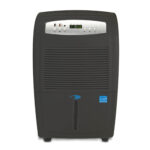
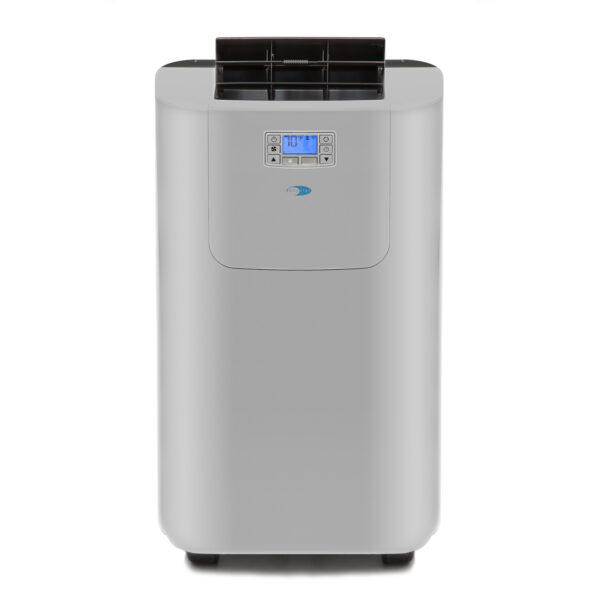
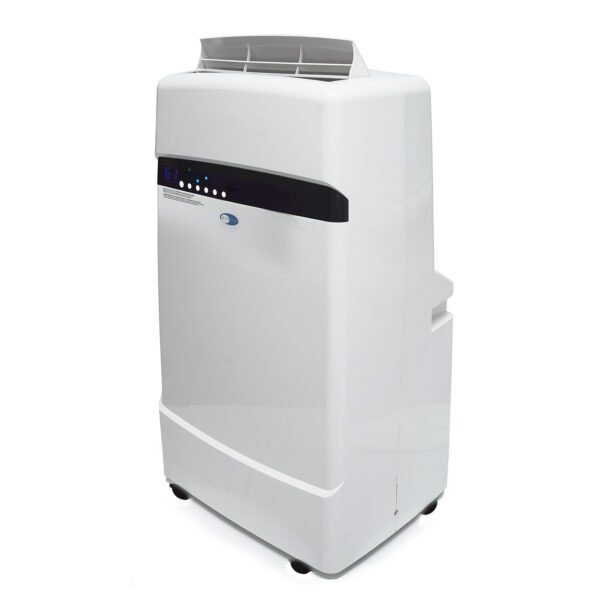
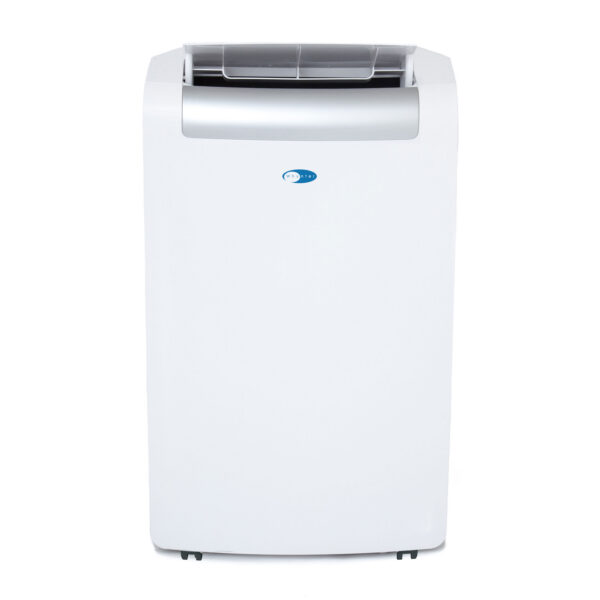
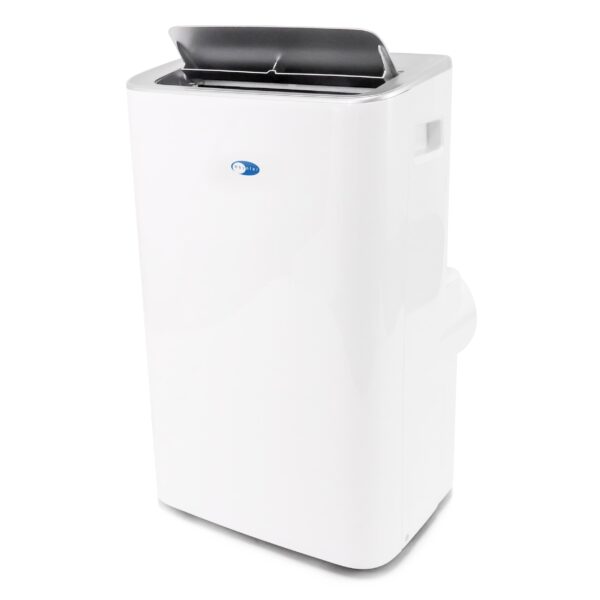
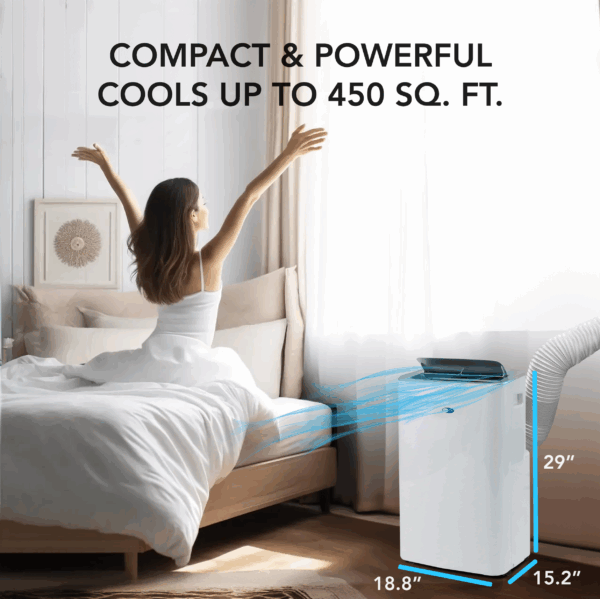
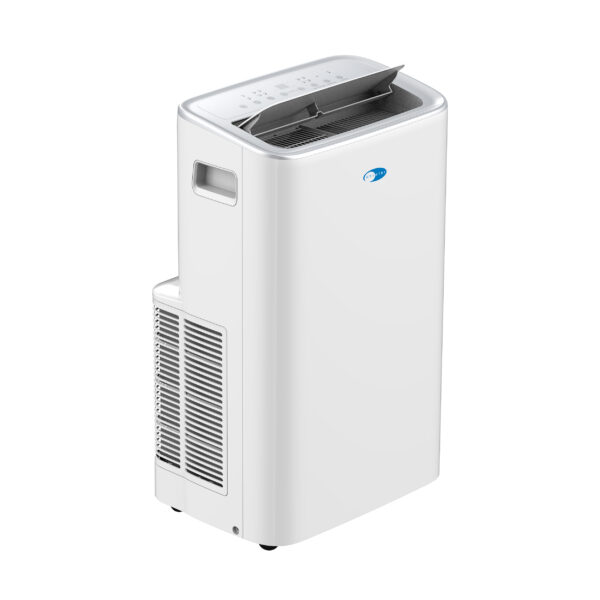
Whynter RPD-561EGP Energy Star 50 Pint High Capacity Portable Dehumidifier with Pump – Gray for up to 4000 sq ft
Product Summary
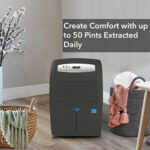
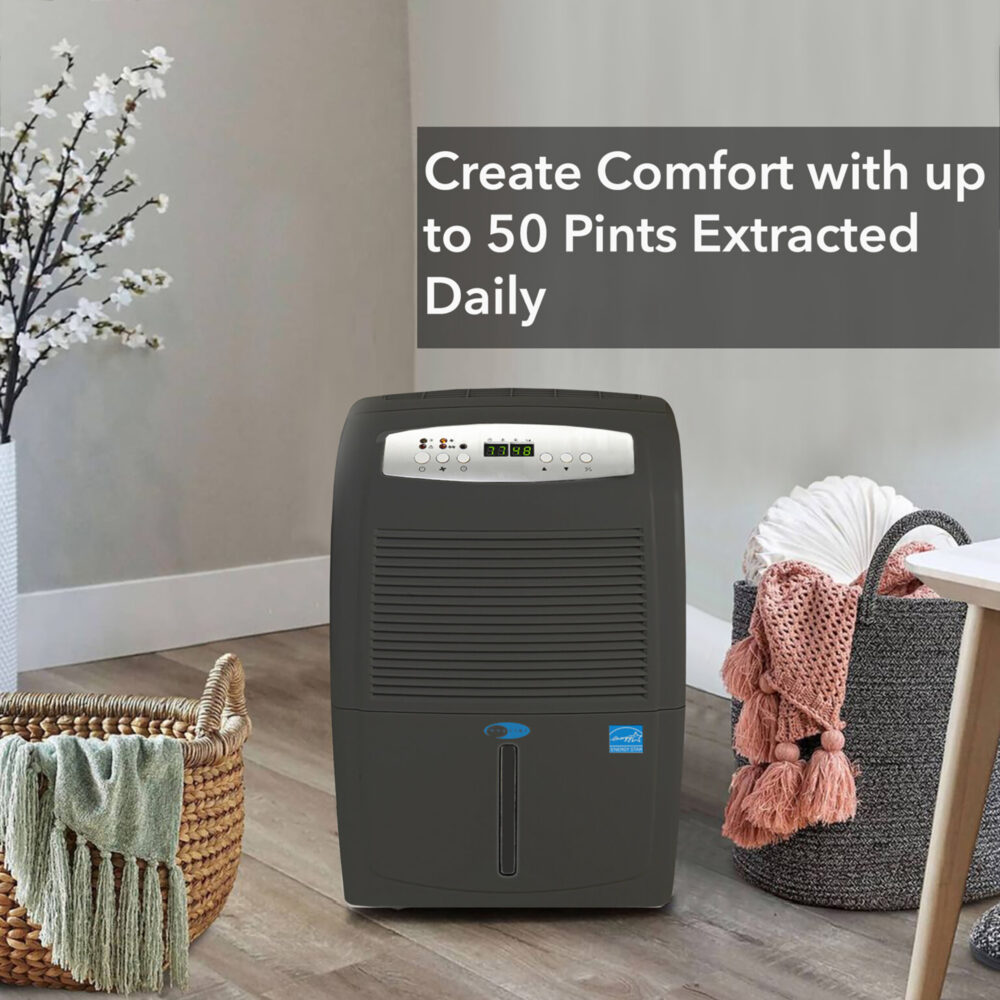
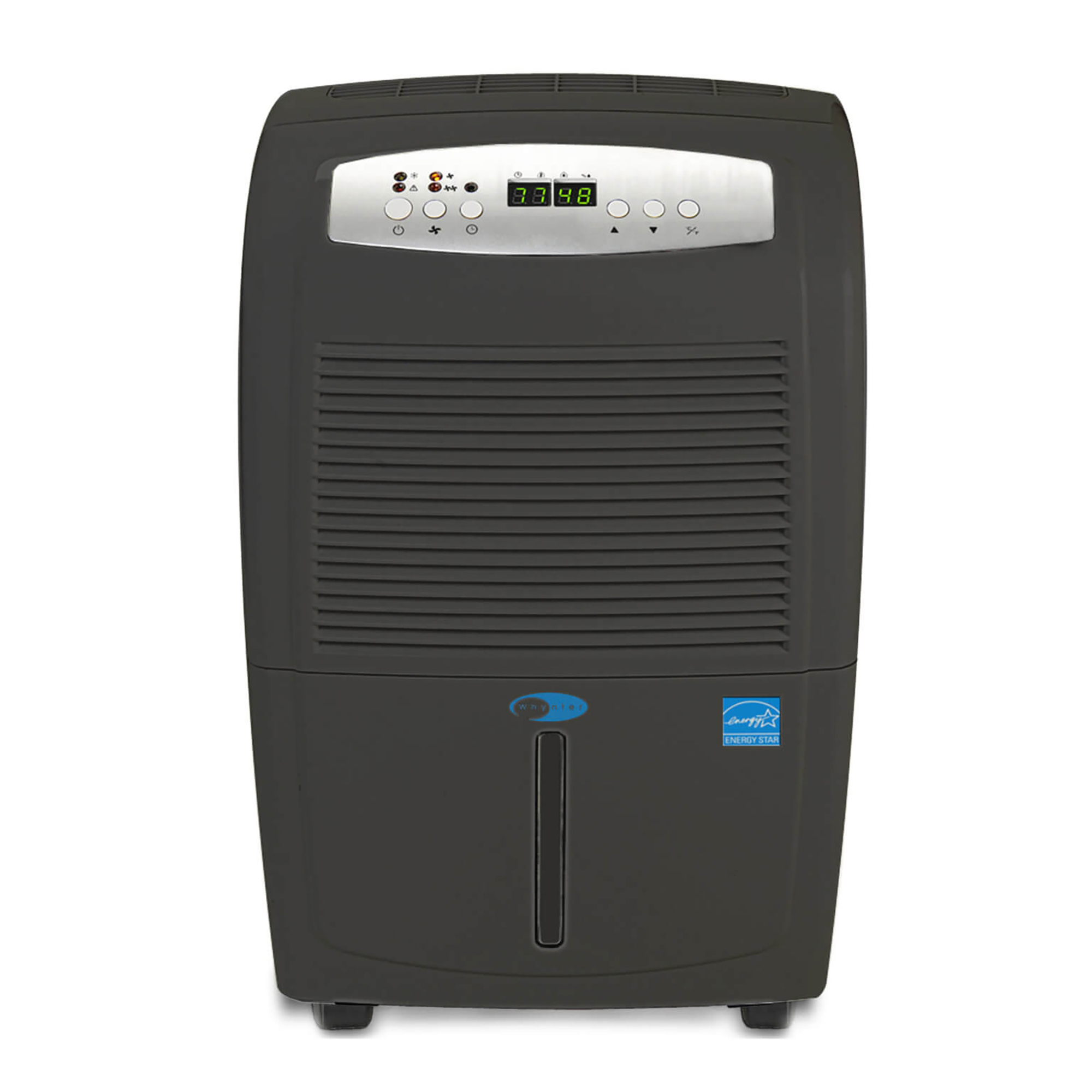
The stylish and powerful Whynter RPD-561EGP Energy Star 50 Pint Portable Dehumidifier with Built-in Pump is a high capacity unit with an impressive capability of removing up to 50 pints of moisture from the air per day. Featuring an internal condensate pump, this unit is specifically designed for high volume usage without having to worry about interrupted operation.
ENERGY STAR rated
This unit is ENERGY STAR rated, demonstrating specifications for lower energy consumption during use. This is especially important if you plan on operating the unit on a frequent basis.
Drainage options
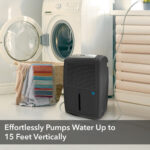
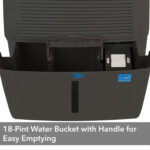
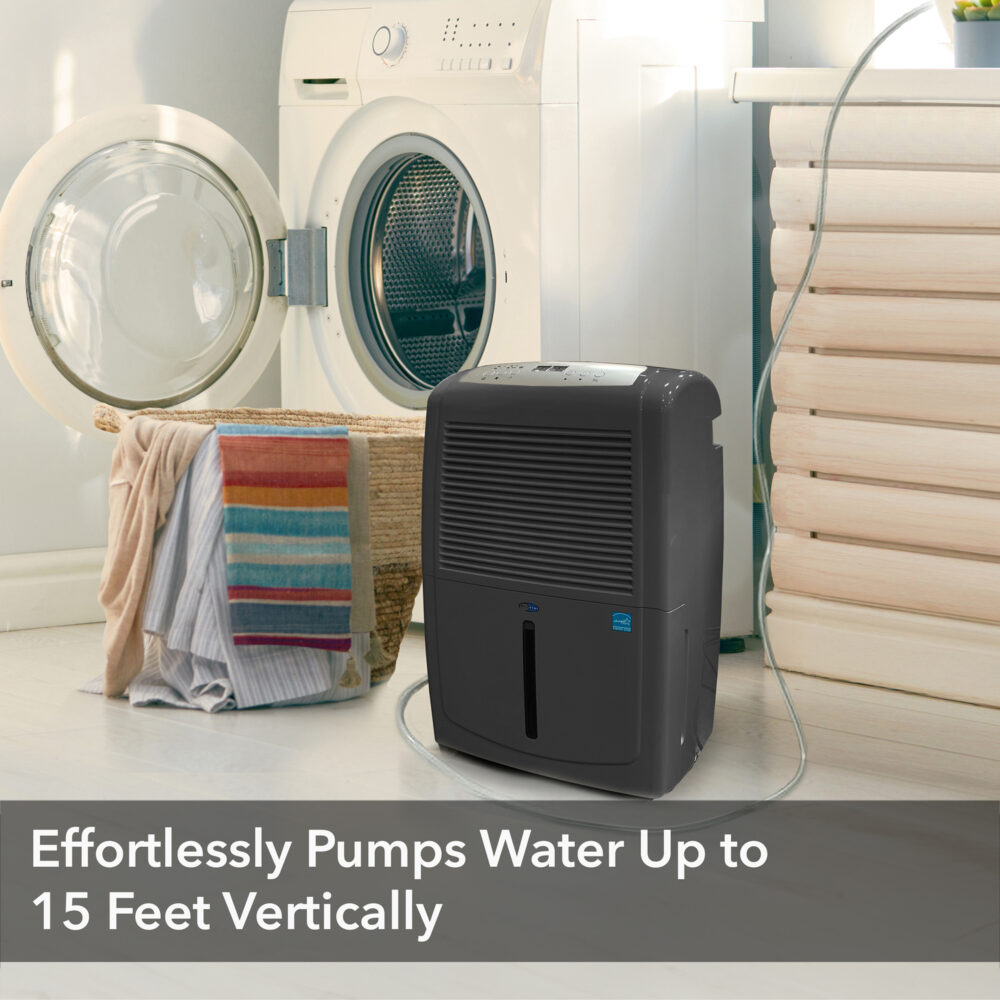
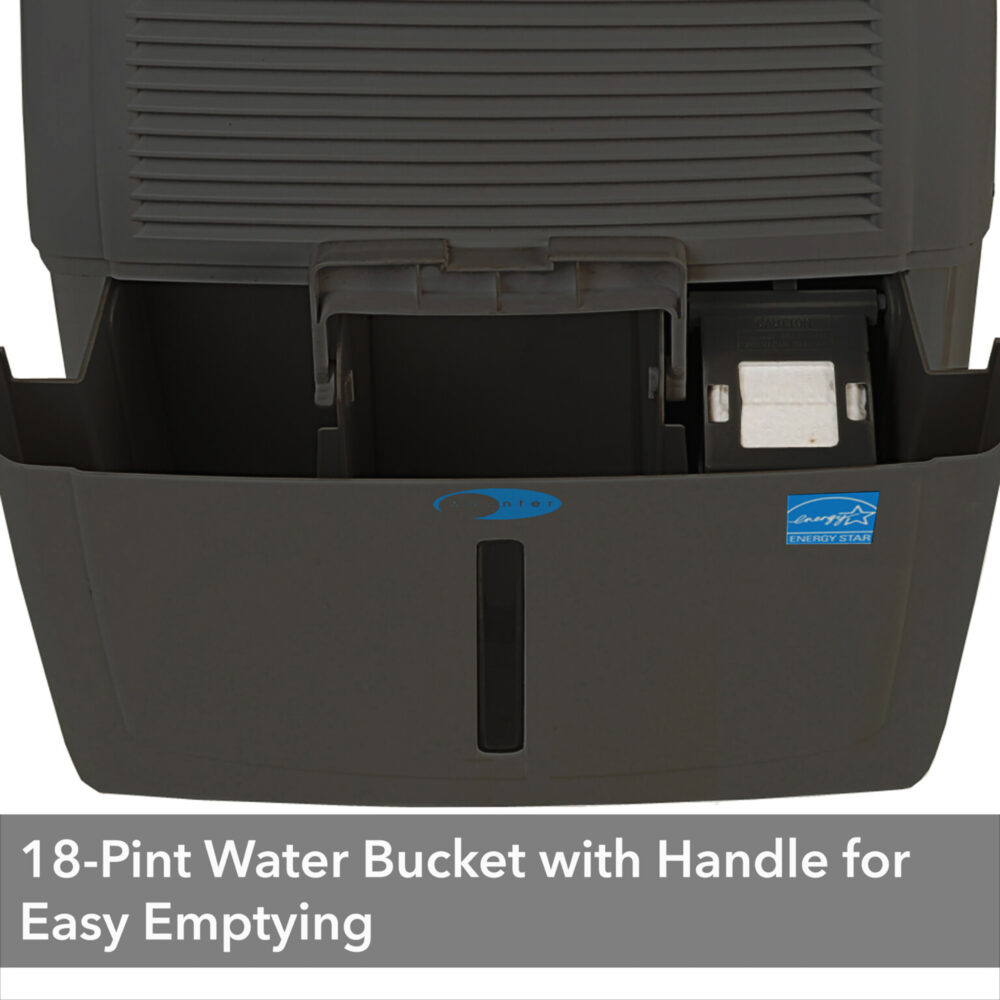
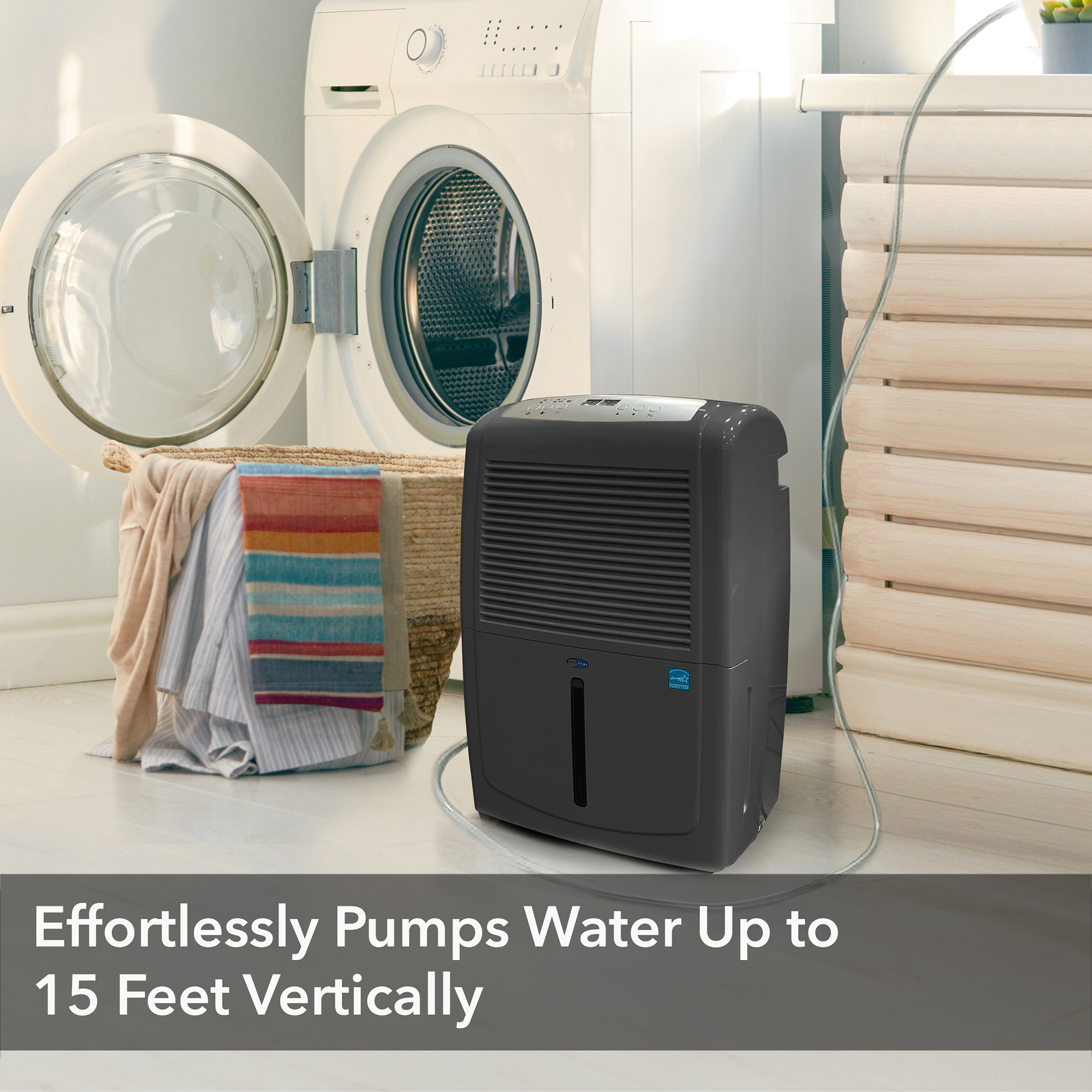
This portable dehumidifier can be continuously operated with 3 drainage options; manual drain, gravity drain, and condensate pump drain. This portable dehumidifier includes a 18-pint bucket that can be removed and emptied. The condensate pump can pump out (and up) condensation water through the included 16.5’ drain for continuous water removal with approximately 15’ of vertical lift.
Auto Restart and Auto Shutoff
This unit can automatically turn off when set humidity levels have been met or when the water reservoir is full. The unit is also designed to restart in the event of a power interruption.
The Whynter RPD-561EGP provides cost-effective and energy-efficient operation, without sacrificing design and performance. Designed for space constrained usage, this unit is suited for enclosed areas up to 4000 sq. ft.
*****************************************************************************
Dehumidifiers are sized based on pint capacity. Not long ago, the Department of Energy (DOE) efficiency standards for dehumidifiers have changed. The previous dehumidifier testing standards of 80 degrees Fahrenheit and 60% humidity have been changed to a new testing standard of 65 degrees Fahrenheit and 60% humidity. Under this new testing conditions, keep in mind that the dehumidifiers have not changed, but only the environment were these products are tested changed.
Past STANDARDS
Changes made in 2012 expected dehumidifiers to be tested at a surrounding temperature of 80 degrees Fahrenheit and 60% humidity. Accordingly, most dehumidifiers were built as 30, 50, and 70 pint units, referring to the amount of moisture removed in 24 hours under those conditions.
NEW 2019 DEHUMIDIFIER STANDARDS
The Department of Energy (DOE) efficiency standards for dehumidifiers have changed since 2019. Dehumidifiers are presently tested at 65F and 60% humidity, which is 15 degrees lower than previously. Since there is less moisture to remove from cooler temperatures, the quantity of pints for each dehumidifier removes likewise dropped. The standard capacities under the new conditions are 20, 30 and 50 pint dehumidifiers(rather than 30, 50, and 70 pint models when tested at 80°F.) The dehumidifiers have not changed, but only the environment were these products are tested changed.
If you are not sure what size you need, head over to our sizing chart to see what pint capacity works best for your room size. If you want to learn more about these sizing requirements, please contact our Whynter Customer Support team and we will be happy to help you choose the right dehumidifier for your space.

Specification
Additional information
| Color | Gray |
|---|---|
| Energy Star Rated | Yes |
| Dehumidifying Capacity | 50 pints per day |
| Coverage Sq. Ft. | 4000 |
| Bucket Capacity | 18 pts |
| Gravity Drain | Yes |
| Drain Pump | Yes |
| Adjustable Humidity Range | 30-90% |
| Filter Type | Washable pre-filter |
| Auto Restart / Shut off | Yes |
| Continuous Mode | Yes |
| Low Temperature Operation | Yes -min ambient temperature low 40F |
| Auto Defrost | Yes |
| Refrigerant | R-410A |
| Timer | Yes – 24hr Timer |
| Continuous Fan Operation | Yes |
| Maximum Power Consumption | 980 Watts |
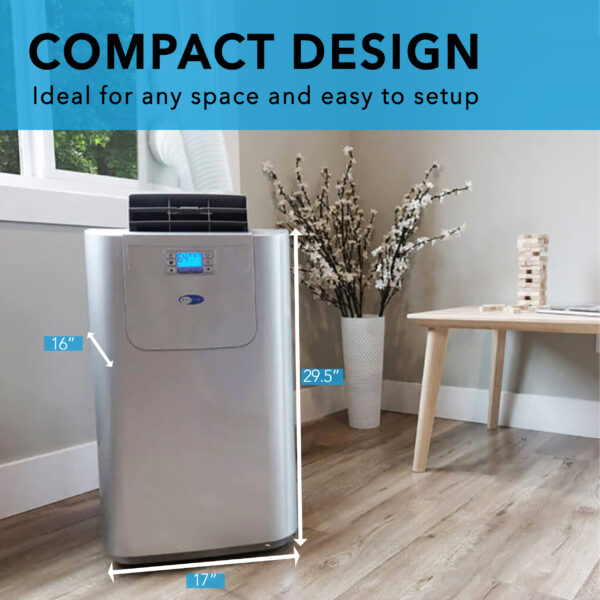
| Unit Dimensions | 15" W x 12" D x 23" H |
Features
● 50 pint (70 Pint 2012 DOE Standard) capacity dehumidifier
● 18 pint removable water bucket
● Auto-restart and Auto-shutoff functions
● Adjustable humidity range of 30 – 90% relative humidity
● Low temperature operation (minimum ambient temperature low 40°Fs)
● Auto-defrosting capability to prevent frost build-up inside unit
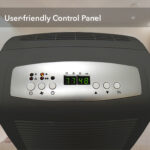
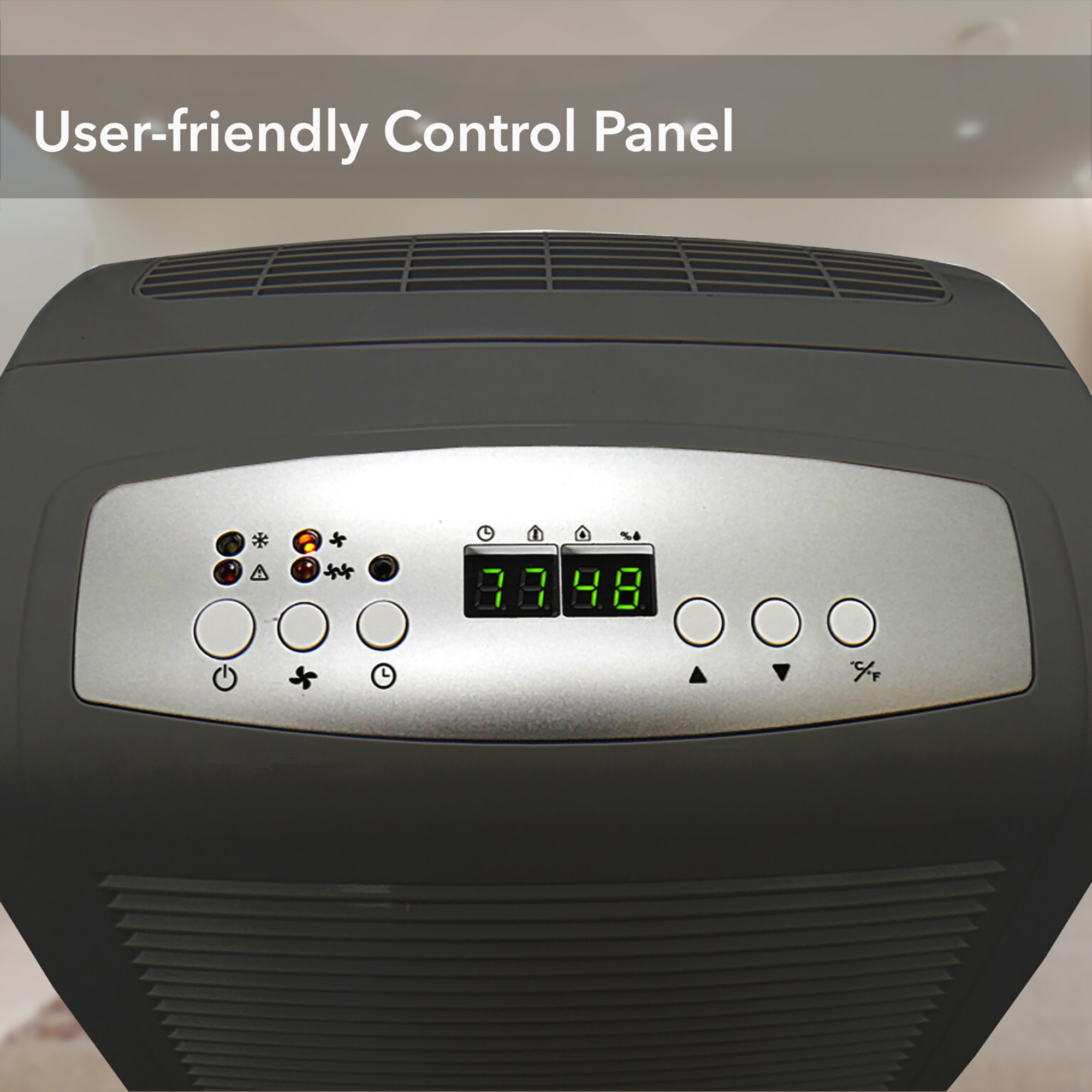
● Electronic controls with humidity sensor settings
● Direct drain option for continuous operation
● Condensate pump that pushes water up or over a longer distance
● Dual fan speeds and 24 timer function
● Washable pre-filter included
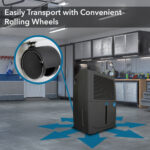
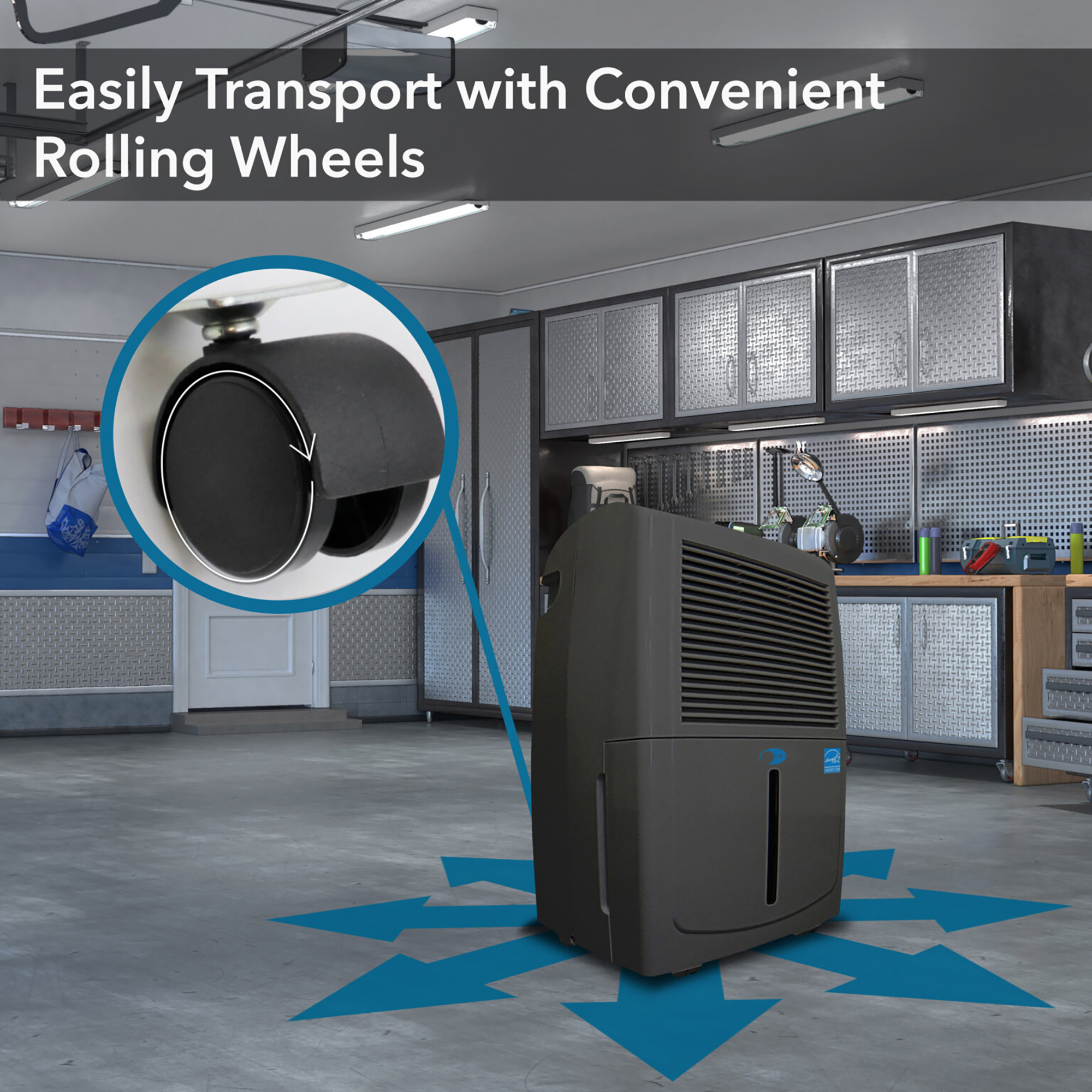
● Handles and caster wheels for portability
● Non ozone-depleting refrigerant: R410a
● 16.5′ drain hose included for condensate pump drain
● 3′ drain hose included for gravity drainage
● Air Flow: 330 m3/h / 194CFM
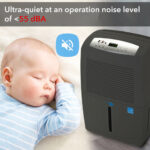
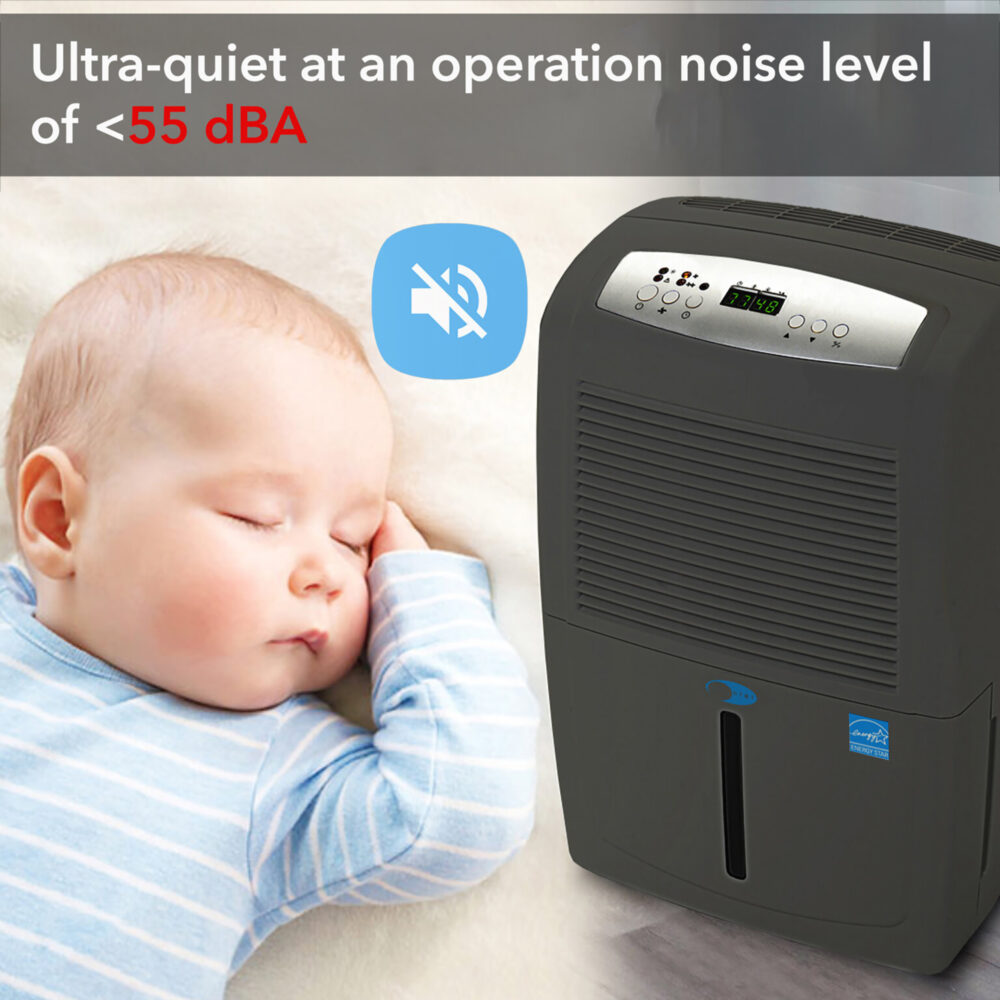
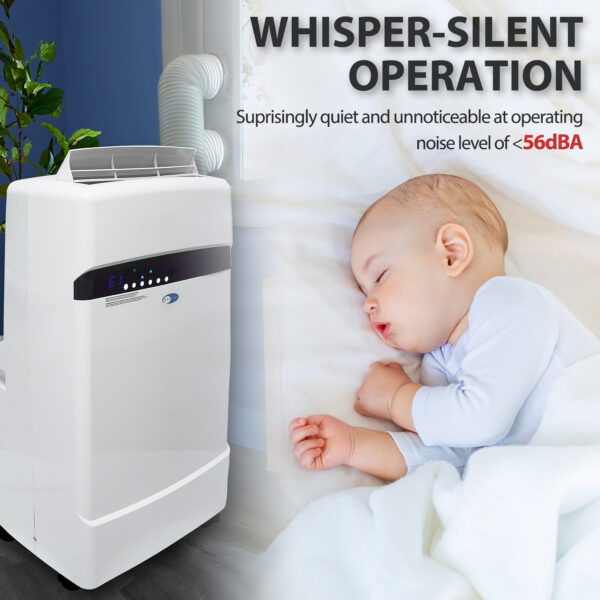
● Noise Level: <55 dB(A)
● Power consumption: 980 Watts / 8.8 Amps
● Power Supply: 115 V /60 Hz
● Unit Dimensions: 15” W x 12” D x 23.25” H
● Packaging Dimensions: 17″ W x 14.5″ D x 26″ H
● Product weight: 41 lbs
● Package weight: 45 lbs
● UL listed and Energy Star rated
● UPC 850014459109
*This unit comes with one year warranty.
Awards & Mentions
Accessories
User Manual
Related Products
-
ARC-EH-TYPE-101
Whynter ARC-EH-TYPE-101 Replacement Exhaust Hose
-
ARC-EH-TYPE-S
Whynter ARC-EH-TYPE-S Replacement Exhaust Hose
FAQs
What is a portable air conditioner?
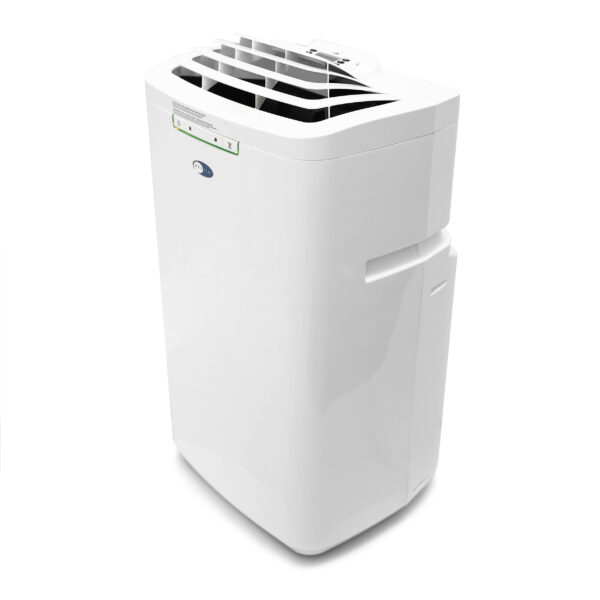
A portable air conditioner is a self-contained, freestanding unit designed to cool individual rooms. It includes wheels for easy movement, an exhaust hose, and a window kit to vent hot air outside. Some models also include a heat function using reverse air conditioning, allowing you to warm a room in cooler weather. Ideal for homes, offices, dorms, server rooms, and more.
How does a portable air conditioner work?
- Draws in warm room air
- Cools it using an internal compressor and refrigerant
- Expels cooled air back into the room
- Vents hot air outside through an exhaust hose
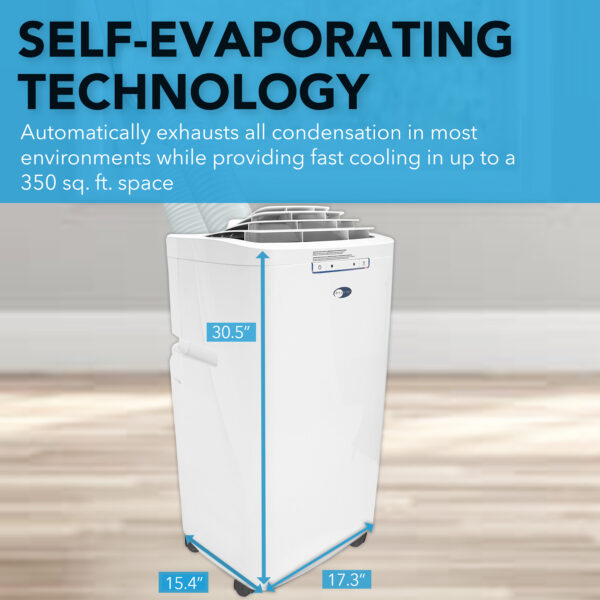
- Removes humidity through automatic evaporation or drainage
How do portable air conditioners with a heat function work?
Portable AC models with a heat function use reverse air conditioning, or a heat pump. In cooling mode, the system extracts heat from inside the room and expels it outside. In heating mode, the process is reversed: the unit extracts heat from the outside air and delivers it inside. The heat function requires ambient temperatures above 41°F (5°C) because below this temperature, there isn’t enough heat in the outside air for the heat pump to operate efficiently, which can reduce performance or prevent heating altogether.
Do portable air conditioners need to be vented?
Yes. All portable ACs must vent hot air to the outside to cool effectively. This is typically done through a window using the included kit. Alternate venting options include sliding doors, drop ceilings, or dedicated wall vents.
Can I install the window kit vertically or horizontally?
Yes. Whynter window kits work with both vertical (sliding) and horizontal (sash) windows. Measure your window and cut the panel to fit for a secure seal.
Can I use a portable AC without a window?
Not directly. While a window is the most common solution, alternatives include:
• Vertical sliding doors (with kit)
• Drop ceiling panels
• Wall vent installation
• Dryer vent exhaust (if compatible)
What is the difference between single hose and dual hose units?
• Single hose:
Pulls air from the room to cool
Simpler setup, less efficient in large or sunny rooms
• Dual hose:
One hose brings in outside air
One hose exhausts warm air
Cools faster and helps maintain room pressure
How do I choose the right size portable AC?
Use BTU (British Thermal Unit) ratings to match your room size:
Up to 300 sq ft → 8,000–10,000 BTU
300–500 sq ft → 11,000–14,000 BTU
500+ sq ft → 14,000+ BTU
Consider ceiling height, sun exposure, and appliance heat when sizing.
The above information provided is for reference only.
Do portable air conditioners remove humidity?
Yes. As the unit cools, it also dehumidifies the air. Most Whynter models use auto-evaporation, and in high-humidity areas, you can also connect a drainage hose for continuous water removal.
How do I drain the unit?
Auto-evaporation: Water is expelled with hot air through the exhaust hose
Manual drain: Open the lower rear drain port to remove excess water. Place a low-profile container, shallow pan, or bucket under the port to catch the water safely.
Tip: For a cleaner and more convenient solution, use the Whynter Drain Bucket Accessory, designed to fit securely beneath the drain outlet and prevent spills.
Continuous drainage (applicable models only): Attach a hose to the upper drain port in a downward direction for hands-free draining into a floor drain or bucket
Tip: Ensure the continuous drainage hose flows downward by gravity and is not kinked or elevated, as this may prevent proper drainage.
Can my portable air conditioner share an outlet with other devices?
No. For safety and optimal performance, your portable air conditioner should be plugged directly into a grounded wall outlet on a dedicated circuit. Sharing an outlet with other high-powered devices (like refrigerators, microwaves, or power strips) can cause:
• Circuit overloads or tripped breakers
• Overheating or fire hazards
• Damage to the unit
• Voided warranty
Tip: If a dedicated outlet isn’t available, consult a licensed electrician.
How loud is a portable air conditioner?
Most units operate between 50–60 dB, similar to a conversation or fan. Sound levels vary by fan speed and compressor activity.
Can I run my portable AC continuously?
Yes, but it’s best to give the unit breaks for optimal performance and longevity. Make sure:
• Filters are clean
• Hoses are secure
• The unit is placed in a ventilated area
Why isn’t my unit cooling properly?
Common reasons:
• Room is too large for the unit
• Direct sunlight or poor insulation
• Dirty filters or blocked exhaust
• Window kit is not sealed properly
• Compressor delay (wait 3–5 minutes before restarting)
How do I clean the filters?
Remove and rinse the washable filters with warm water every two weeks. Let dry completely before reinstalling.
How do I store my portable air conditioner?
Follow these steps:
- Power off and unplug
- Drain all water from the unit
- Clean and dry the filters and hose
- Coil accessories and store in the unit (if possible)
- Keep upright in a cool, dry place
- Before next use, let the unit sit upright for at least 2 hours.
Is the refrigerant eco-friendly?
Yes. Whynter portable ACs use eco-friendly, CFC-free refrigerants such as R-32 or R-410A.
What is EER (Energy Efficiency Ratio)?
• EER (Energy Efficiency Ratio) measures how efficiently a portable air conditioner cools a space, calculated as:
EER = BTUs ÷ Watts
A higher EER means better energy efficiency. For example, a unit with 10,000 BTUs that uses 1,000 watts has an EER of 10.
What is CEER (Combined Energy Efficiency Ratio)?
• CEER (Combined Energy Efficiency Ratio) is a more modern metric that includes standby/off-mode power consumption.
CEER is considered a better indicator of real-world energy usage, especially for units with digital displays or remotes. Look for CEER ratings of 8.5 or higher for good efficiency.
Tip: Both EER and CEER are helpful, but CEER is used more often for window units, while portable ACs are better evaluated by their SACC rating (see next question).
What is SACC (Seasonally Adjusted Cooling Capacity)?
SACC, or Seasonally Adjusted Cooling Capacity, is the Department of Energy’s (DOE) 2017 standard for portable air conditioners. Unlike the older BTU ratings, SACC accounts for:
• Variable room conditions
• Heat added by the unit’s motor
• Air leakage during venting
• It gives a more accurate picture of how well a portable AC will cool in real-world use.
Example:
An older unit rated at 14,000 BTU (ASHRAE) might have a SACC rating of only 8,500–10,000 BTU. This doesn’t mean it’s weaker—just more accurately labeled.
Look for:
Both SACC and ASHRAE BTU ratings on modern units
SACC numbers between 6,000–12,000 BTU for most home uses
A unit with dual hose design will generally have a higher SACC for the same ASHRAE rating
Is it safe to run the AC overnight or while I’m away?
Yes, when used as directed:
• Ensure unit is on a flat surface
• Hoses and vents must be secure
• Filters must be clean
• No flammable items nearby
Can I extend the exhaust hose?
We do not recommend extending the exhaust or intake hose of your portable air conditioner. Longer hoses can:
• Reduce cooling efficiency
• Increase backpressure on the compressor
• Lead to overheating or system failure
• Void your product warranty
• If extension is absolutely necessary, follow these guidelines:
• Do not exceed 9 feet in total hose length
• Avoid sharp bends or vertical lifts
• Use only rigid or semi-rigid ducting that matches the original hose diameter — using a Whynter-approved accessory is best
• Never connect multiple hoses or use duct tape as a permanent seal
Tip: Always place the unit close to the window or venting location. The shorter and straighter the hose, the better the performance and longevity of your portable AC.
What accessories are available for Whynter portable ACs?
• Replacement window kits
• Exhaust and intake hoses
• Continuous drain hoses
• Remote controls
• Foam insulation seals
Visit our Accessories Page for compatible parts.
My unit displays STOP, P1, or FL—what does that mean?
These messages indicate that the internal tank is full. Drain the unit manually or ensure the drain hose is properly connected for continuous drainage.
What’s the best way to improve cooling performance?
• Close blinds and windows during daylight
• Keep doors closed in the room being cooled
• Clean filters regularly
• Use dual-hose units for larger spaces
• Do not extend or bend the exhaust hose unnecessarily
My portable AC window kit is too long for the window. What should I do?
The included window kit is designed to fit most standard vertically or horizontally sliding windows. However, because window sizes can vary, some customization may be required.
If the panel with the hose cutout is too long for your window or door opening, it can be trimmed to size. We recommend cutting from the end opposite the hose cutout to avoid damaging the connection point or screw holes.
For best results, use a fine-tooth hand saw, rotary tool (such as a Dremel), or a plastic cutting tool. Many hardware stores can also assist with cutting the panel if you prefer not to do it yourself.
Always work on a flat surface, cut carefully, and wear appropriate safety gear.
Can the window screen be left in place?
Yes, the window screen can remain in place and won’t interfere with the installation.
Can I install through a wall rather than the window?
Yes, although designed for window venting. While wall installation is possible, it requires some modification. For best results, use the included window panel with the pre-cut hose opening. Install the panel into the wall opening—this allows you to securely connect the exhaust hose using the original accessories and maintain a proper seal.
Can I install it in a casement window?
An after-market casement window kit can be used, or a custom kit can be made using Plexiglas.
How often do I need to clean the air filters?
The washable air filters should be cleaned every two weeks during regular use.
If you notice reduced airflow, or visible buildup, it may be time to clean them sooner.
How often should I replace the carbon filters?
The carbon filters should be replaced every 2 to 3 months, depending on usage and air quality.
If you notice reduced airflow, increased odors, or visible buildup, it may be time to replace them sooner.
Customer Reviews
4.9
Related Posts